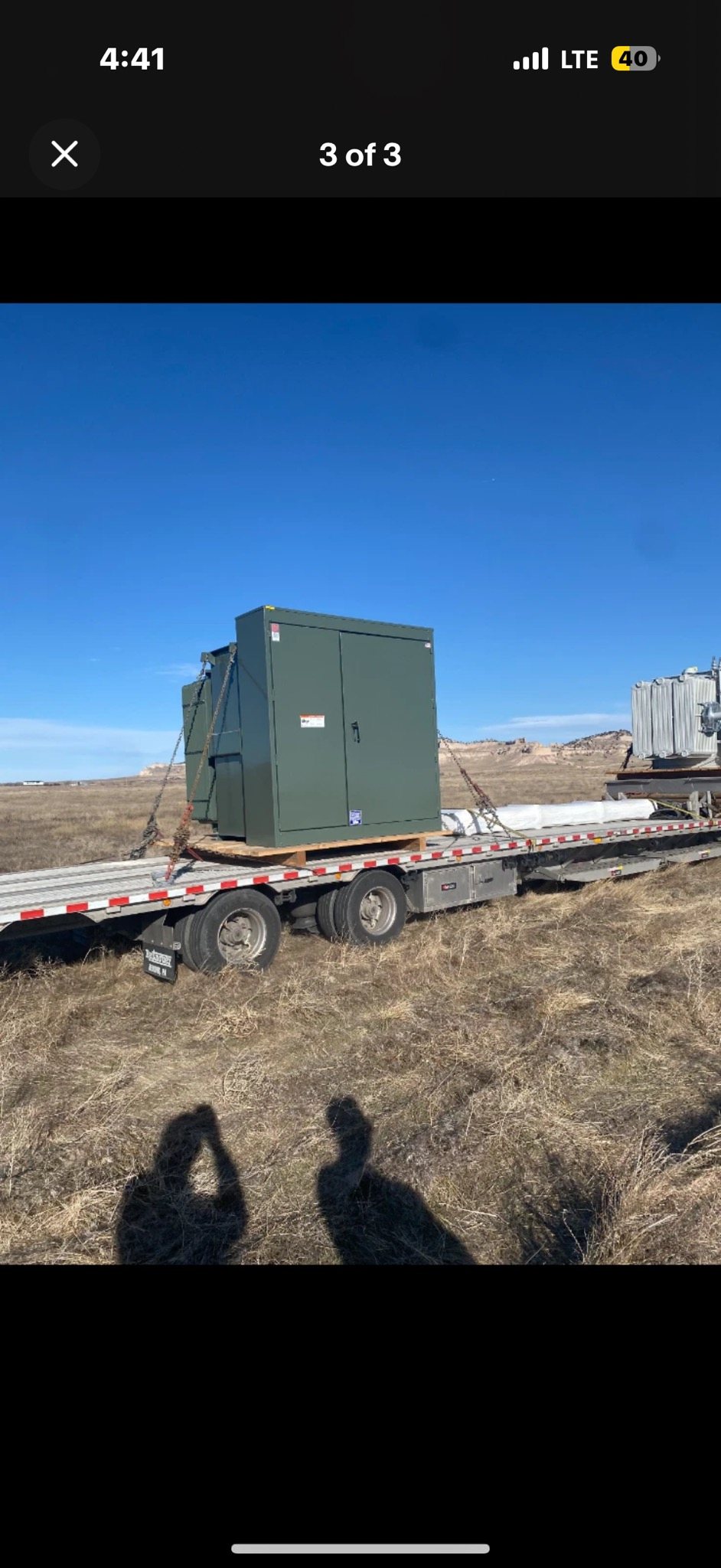
TRANSFORMER TYPES · WYOMING
Sell substation / power transformers
Large substation and power transformers are assessed by voltage class, MVA rating, cooling design, and transport history. Owners should preserve nameplate, test, oil, and outage records because those details determine whether a unit is a reusable asset, a repair candidate, or a salvage opportunity.
THE DETAILS / 01
A clearer way to sell.
What matters when you sell
Large units often have detachable radiators, conservators, bushings, and tap changers that affect loading and freight planning. Photograph each removed component and tag it to the main tank before quotation.
A buyer will compare winding-resistance, insulation-power-factor, turns-ratio, and dissolved-gas records with the transformer’s operating history. Missing results do not automatically end an evaluation, but they usually make inspection and contingency planning more important.
Long-idle units need a careful review of oil level, breather condition, gasket seepage, corrosion, and whether bushings remained protected. Payment timing, pickup scope, and buyer-covered freight should be confirmed in the quotation rather than assumed from a listing.
Build a Useful Asset Record
For a statewide sale, start with the transformer’s location, complete nameplate, voltage class, MVA rating, cooling arrangement, and known transport history. Add the latest available winding-resistance, insulation-power-factor, turns-ratio, and dissolved-gas reports, along with oil and outage records. Existing documentation helps distinguish a unit that may be reused from one better assessed for repair or salvage; missing tests do not automatically rule out an evaluation.
Account for Every Loose Component
Substation units can include radiators, conservators, bushings, tap changers, and controls that have been removed or stored separately. Photograph each item and tag it to the main tank before requesting an offer; note anything missing, damaged, or of uncertain identity. Clear component accounting supports condition review and helps define what is included in the sale, rather than leaving loading and transport scope to assumption.
Describe the Site and Removal Scope
State whether the transformer is energized, isolated, drained, dismantled, or ready for loading, and identify who is responsible for each removal step. Do not touch or test energized equipment; qualified personnel must handle isolation and any sampling. Provide practical access details such as route constraints, lifting or loading limitations, and site requirements. These location-specific factors can affect pickup planning across a large service area.
Agree on Terms Before Scheduling
For long-idle equipment, report known oil level, breather condition, gasket seepage, corrosion, and whether bushings were protected, without attempting checks that require unsafe access. Send photographs and records rather than commissioning new tests solely for a quote. Ask the buyer to state the offer basis, included removal scope, buyer-covered freight, and upfront payment timing in agreed terms. Any offer depends on condition, ownership, and those terms.
THE PROCESS / 02
From nameplate to payment.
Send the details
Share the nameplate, overall photos, pickup city and what you know about the condition.
Review the offer
We review the equipment and discuss a unit-specific cash offer and transaction terms.
Plan the move
We coordinate freight. The agreement defines access, timing, rigging and who handles disconnection.
Get paid upfront
We agree on payment and paperwork before release of the equipment.
MORE TO EXPLORE / 03
Sell more equipment with confidence.
GET A CASH OFFER / 01
Have a transformer to sell?
Start with what you know. A nameplate photo, a few equipment details and the pickup location help us review your unit.
saleselectricalbuyers@gmail.com
WE BUY. YOU GET PAID.