TRANSFORMER TYPES · WYOMING
Sell isolation transformers
Isolation transformers separate primary and secondary circuits through a dedicated magnetic path and are often used for sensitive, medical, industrial, or maintenance applications. For sale assessment, shielding, electrostatic screens, grounding arrangement, frequency, and leakage-related records can matter as much as kVA.
THE DETAILS / 01
A clearer way to sell.
What matters when you sell
Identify whether the unit is a general isolation transformer, shielded unit, medical-grade assembly, or part of a power-quality package. Do not assume a familiar enclosure means the same performance; retain manuals, wiring diagrams, and commissioning records when available.
Inspect terminals, screen connections, grounding points, insulation, enclosure ventilation, and signs of nuisance heating or noise. A qualified person must establish safe isolation before any inspection involving covers, terminations, or test connections.
Some isolation transformers are integrated with bypass switches, filters, monitoring, or harmonic mitigation equipment. Separate the transformer from ancillary gear in the inventory so a buyer can quote reuse, removal, and buyer-covered freight accurately.
Identify the Complete Assembly
Isolation transformers may be standalone units or part of a larger power-quality system. List the transformer separately from any bypass switch, filter, monitoring device, or harmonic-mitigation equipment, and state what is included in the sale. Share the kVA, primary and secondary voltages, frequency, impedance, and available nameplate information; do not infer performance from the enclosure alone.
Document Screens and Grounding
Shielding, electrostatic screens, screen connections, and grounding arrangement can materially affect how a unit is assessed for reuse. Send any available wiring diagrams, manuals, commissioning records, and grounding details. Photographs of the enclosure, terminal compartment, screen connections, controls, and nameplate help clarify configuration. Existing records may be reviewed; a new test is not automatically required.
Describe Condition Safely
Give a straightforward account of the application, load type, operating history, service work, and any known noise, heating, or insulation concerns. Do not open covers, approach terminals, or make test connections while equipment is energized. Inspection involving terminations or internal components belongs with qualified personnel after safe isolation has been established. Include existing inspection or test records if available.
Plan Removal and Freight
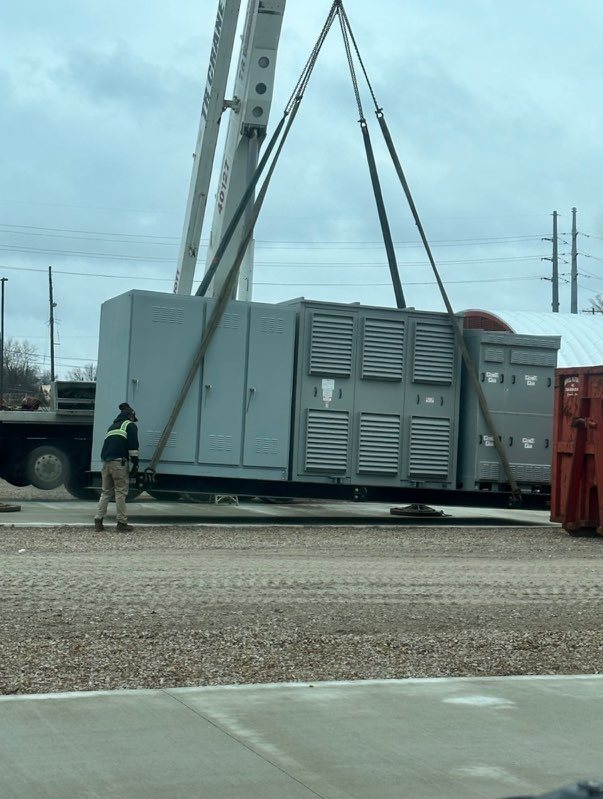
Before requesting an offer, confirm ownership and identify who is responsible for disconnecting and preparing the unit for removal. Provide approximate packed dimensions and weight, access limitations, lifting or handling considerations, and whether ancillary equipment is included. Location and site access can affect removal planning. Any offer depends on condition, ownership, and agreed terms; freight is covered by the buyer, with payment upfront on agreed terms.
THE PROCESS / 02
From nameplate to payment.
Send the details
Share the nameplate, overall photos, pickup city and what you know about the condition.
Review the offer
We review the equipment and discuss a unit-specific cash offer and transaction terms.
Plan the move
We coordinate freight. The agreement defines access, timing, rigging and who handles disconnection.
Get paid upfront
We agree on payment and paperwork before release of the equipment.
MORE TO EXPLORE / 03
Sell more equipment with confidence.
GET A CASH OFFER / 01
Have a transformer to sell?
Start with what you know. A nameplate photo, a few equipment details and the pickup location help us review your unit.
saleselectricalbuyers@gmail.com
WE BUY. YOU GET PAID.