INDUSTRIES · WYOMING
Sell transformers from data centers
Data centers may have redundant dry-type, isolation, UPS, static-transfer, and medium-voltage transformer assets with detailed maintenance records. Decommissioning schedules, bypass states, and chain-of-custody for labeled equipment can be as important as the transformer’s ratings. The most useful sale information connects the equipment to its actual duty, site conditions, and removal constraints rather than making a generic industry claim.
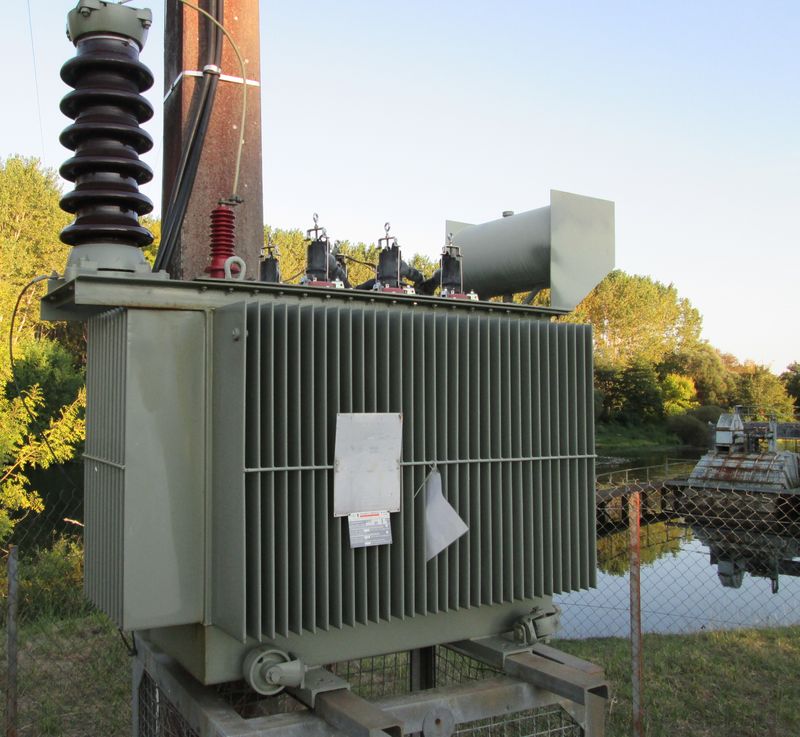
Photo: Cjp24 / CC BY-SA 4.0; resized and compressed

THE DETAILS / 01
A clearer way to sell.
What matters when you sell
Map each transformer to utility, UPS, PDU, generator, or other load and record redundancy role, kVA, voltage, impedance, and cooling. Identify whether bypass gear, monitoring, and busway interfaces are included.
Review thermal scans, load trends, alarms, commissioning tests, and maintenance history, while keeping energized work out of an owner’s self-inspection. Qualified personnel must isolate and verify equipment before removal.
Data center floors and loading docks often impose strict packaging, route, and noise rules. Quote staged removal, buyer-covered freight, and upfront payment requests only after access and schedule are confirmed.
Map Each Unit to Its Electrical Role
Redundant transformers in a data center may serve utility intake, UPS equipment, a PDU, generator systems, isolation duties, or another load. Identify the unit’s location and redundancy role, then provide kVA, voltage, impedance, cooling, and type. Clarify whether monitoring, bypass gear, busway interfaces, or associated controls are included rather than treating the whole electrical path as one asset.
Use Existing Records
Load trends, thermal scans, alarms, commissioning results, and maintenance logs can give useful context for dry-type and other transformer assets. Provide records already on hand; new testing is not required to begin a sale discussion. Do not inspect energized equipment. Qualified personnel must control isolation and verify the unit is safe for removal, while any fluid sampling is handled by qualified personnel.
Coordinate Building Removal
Data-center floors, service corridors, loading docks, packaging rules, and noise limits may constrain the route and schedule. Describe staging requirements, dimensions, weight, dock access, and any planned decommissioning window. Identify bypass or redundancy arrangements only as operational context, not as authorization to disturb live systems. The buyer covers freight when agreed; rigging and disconnection require explicit agreement.
Define the Proposed Sale
Provide ownership information, equipment identifiers, the records available, and a clear list of included accessories. Explain whether the transformer is already removed or still installed, and state the payment timing requested. The buyer pays upfront on agreed terms and freight is buyer-covered as agreed. Any offer depends on condition, ownership, and agreed terms, with removal responsibilities clarified before commitment.
THE PROCESS / 02
From nameplate to payment.
Send the details
Share the nameplate, overall photos, pickup city and what you know about the condition.
Review the offer
We review the equipment and discuss a unit-specific cash offer and transaction terms.
Plan the move
We coordinate freight. The agreement defines access, timing, rigging and who handles disconnection.
Get paid upfront
We agree on payment and paperwork before release of the equipment.
MORE TO EXPLORE / 03
Sell more equipment with confidence.
GET A CASH OFFER / 01
Have a transformer to sell?
Start with what you know. A nameplate photo, a few equipment details and the pickup location help us review your unit.
saleselectricalbuyers@gmail.com
WE BUY. YOU GET PAID.