SELLER GUIDES · WYOMING
Selling transformers: Copper and Core Salvage Guide
When a transformer is not a realistic reuse candidate, copper, aluminum, core steel, tank steel, bushings, and controls can still support a salvage assessment. The owner should document what is present without assuming gross metal weight equals net recoverable value. Owners can use this practical framework to organize records, define scope, and request a quotation without promising a fixed outcome.
THE DETAILS / 01
A clearer way to sell.
What matters when you sell
Identify winding material where documented, core construction, tank and radiator steel, bushings, tap gear, controls, oil, and detachable accessories. Exact recovery depends on design, contamination, dismantling effort, and market conditions.
Keep fluid and PCB records with the asset file; samples and records guide applicable compliance, while licensed professionals handle draining and regulated work. Do not ask an unqualified person to cut, open, or work on equipment that has not been safely isolated.
Request a scope that distinguishes complete-unit purchase, buyer dismantling, seller dismantling, and scrap-only pricing. Buyer-covered freight and payment terms should be explicit because heavy scrap can have negative logistics value.
Assess the Materials, Not Just the Weight
A transformer with limited reuse prospects may still merit a salvage review of its windings, core, tank, radiators, bushings, and controls. Identify copper or aluminum only where records or inspection establish the material. Gross equipment weight is not the same as recoverable metal: construction, attachments, contamination, and dismantling effort all matter.
Keep Fluid and Condition Records Together
Include fluid type and volume, PCB documentation, leak history, and any existing condition reports with the asset file. If fluid work is needed, qualified professionals should handle sampling, draining, and regulated tasks. Do not ask unqualified workers to cut open or dismantle equipment that has not been safely isolated.
Define Who Does the Dismantling
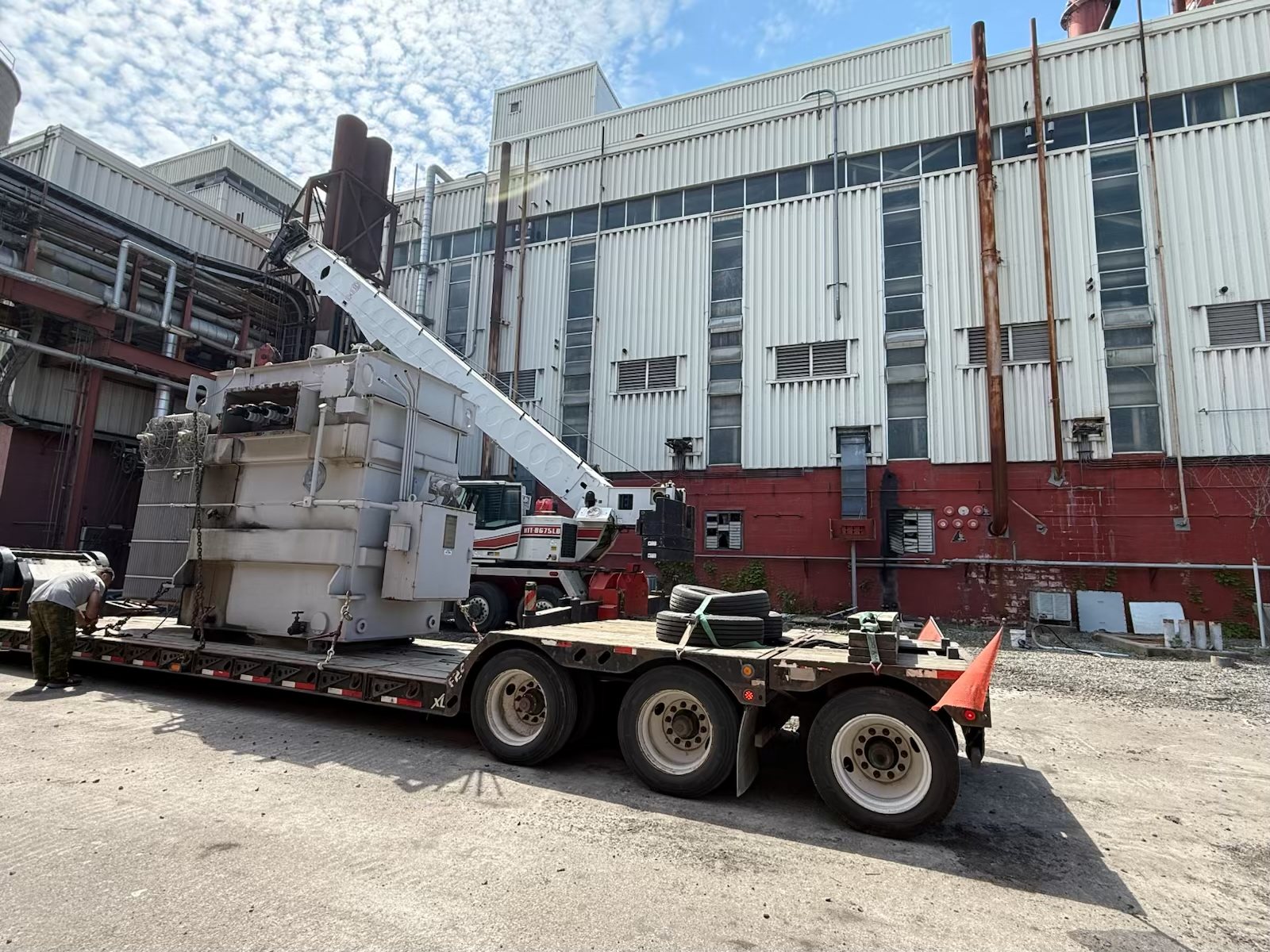
Photograph the unit, accessories, and storage setting, and note whether components are already detached. Request clarity on whether the proposed scope is a complete-unit purchase, buyer-performed dismantling, seller-performed dismantling, or scrap-only assessment. These distinctions affect loading, site access, and the work required before a heavy transformer can leave.
Compare the Agreed Sale Scope
Provide available weights, material descriptions, ownership details, and known condition without promising a particular recovery result. An offer depends on condition, ownership, and agreed terms. Specify whether freight is buyer-covered and confirm upfront payment timing in writing; separately identify responsibility for loading, rigging, fluid management, and any dismantling.
THE PROCESS / 02
From nameplate to payment.
Send the details
Share the nameplate, overall photos, pickup city and what you know about the condition.
Review the offer
We review the equipment and discuss a unit-specific cash offer and transaction terms.
Plan the move
We coordinate freight. The agreement defines access, timing, rigging and who handles disconnection.
Get paid upfront
We agree on payment and paperwork before release of the equipment.
GET A CASH OFFER / 01
Have a transformer to sell?
Start with what you know. A nameplate photo, a few equipment details and the pickup location help us review your unit.
saleselectricalbuyers@gmail.com
WE BUY. YOU GET PAID.