SELLER GUIDES · WYOMING
Selling transformers: Decommissioning a Substation Guide
Substation decommissioning is an asset-control project involving electrical isolation, records, environmental review, dismantling, and logistics. A seller can make transformer quotations more useful by defining the sequence and separating equipment removal from site restoration. Owners can use this practical framework to organize records, define scope, and request a quotation without promising a fixed outcome.
THE DETAILS / 01
A clearer way to sell.
What matters when you sell
Create an equipment register covering transformers, breakers, switches, CTs/PTs, relays, bus, batteries, controls, cables, oil, and foundations. Link each item to drawings, photos, serials, and its intended disposition.
Coordinate outage, isolation, grounding, permits, fluid management, PCB documentation, and qualified contractors; do not suggest user testing energized equipment. Samples and records guide applicable compliance, and licensed professionals handle regulated work.
Request phased pricing for complete assets, salvage, dismantling, loading, and buyer-covered freight. State whether upfront payment is requested and leave practical terms to the quotation.
Start with a tagged asset register
A substation retirement may include more than its main transformer: breakers, instrument transformers, relays, controls, batteries, bus, cables, oil and foundations can have separate dispositions. Build a register that links each item to its location, serial number, photographs and drawings. Mark what is being offered for purchase apart from equipment or work outside the sale.
Coordinate records and regulated work
Gather available nameplate data, single-line drawings, maintenance history and fluid or PCB documentation. Existing reports can help clarify condition; new testing is not required to begin a quotation. Coordinate outages, isolation, grounding, permits and environmental review with qualified professionals. Qualified personnel must handle isolation and any fluid sampling, and licensed professionals should direct regulated fluid or cleanup work.
Set removal and loading boundaries
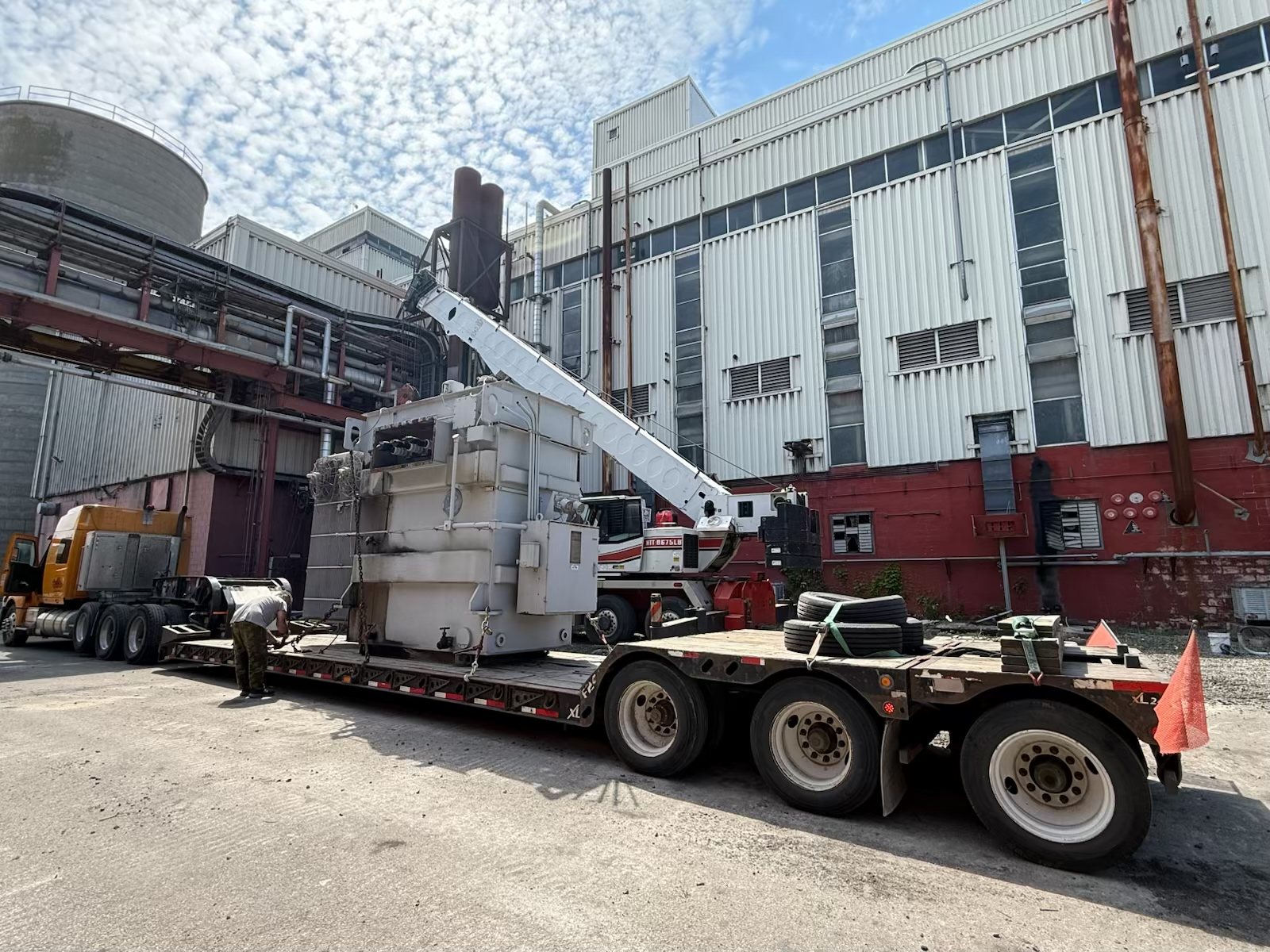
Describe access roads, gates, overhead clearances, working space, lifting constraints and the intended loading area. State whether the request concerns the complete transformer, other substation equipment, or a broader dismantling scope. Identify who is responsible for disconnection, rigging, loading and site restoration; do not assume those services are included unless agreed in writing.
Request clear commercial terms
Send the inventory, photos and available records with the desired removal sequence, then ask for a written cash offer. The offer depends on condition, ownership and agreed terms. Confirm scope, buyer-covered freight, loading responsibilities and payment timing; payment is upfront on agreed terms. Separate equipment purchase from foundation removal, cable work or restoration so each responsibility is clear.
THE PROCESS / 02
From nameplate to payment.
Send the details
Share the nameplate, overall photos, pickup city and what you know about the condition.
Review the offer
We review the equipment and discuss a unit-specific cash offer and transaction terms.
Plan the move
We coordinate freight. The agreement defines access, timing, rigging and who handles disconnection.
Get paid upfront
We agree on payment and paperwork before release of the equipment.
GET A CASH OFFER / 01
Have a transformer to sell?
Start with what you know. A nameplate photo, a few equipment details and the pickup location help us review your unit.
saleselectricalbuyers@gmail.com
WE BUY. YOU GET PAID.