SELLER GUIDES · WYOMING
Selling transformers: Nameplate Data Guide
Accurate nameplate transcription is one of the fastest ways to reduce uncertainty when offering a used transformer. The useful record includes electrical ratings, construction, serial identity, accessories, and any plate or drawing that explains taps and connections. Owners can use this practical framework to organize records, define scope, and request a quotation without promising a fixed outcome.
THE DETAILS / 01
A clearer way to sell.
What matters when you sell
Photograph the whole plate square-on and capture close-ups of serial, kVA/MVA, voltages, frequency, phase, impedance, cooling, insulation, temperature rise, and tap data. Record units exactly and flag illegible fields rather than guessing.
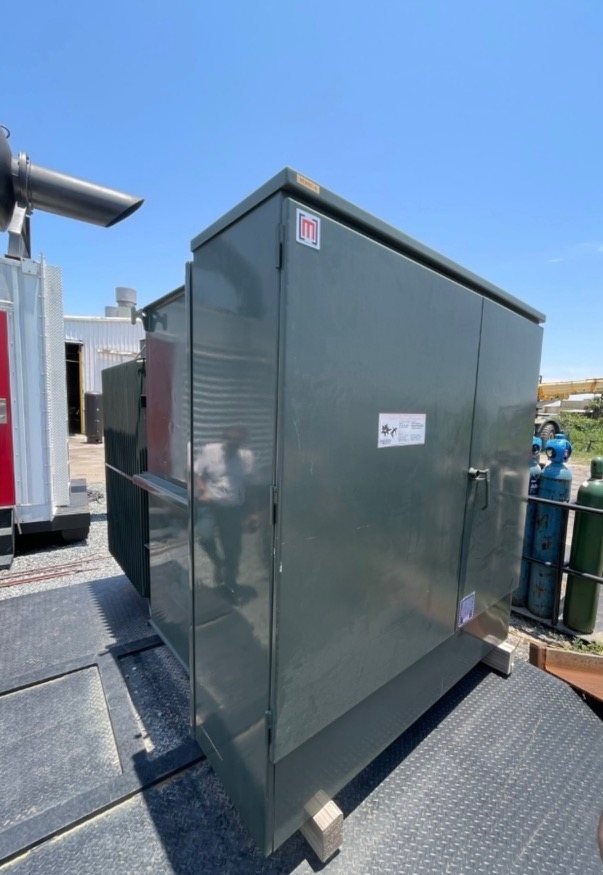
Add photos of bushings, terminals, tank or enclosure, control cabinets, coolers, lifting points, and included accessories. Drawings can resolve vector group, neutral, tertiary, grounding, and regulator or rectifier connections that a plate omits.
Use one inventory line per physical asset and link replacement parts or detached components to that line. This makes quotation scope, buyer-covered freight, and pickup planning more precise.
Capture the Transformer’s Identity
A legible nameplate gives a buyer a starting point for assessing a used transformer. Photograph the full plate straight-on, then take close views of the serial number, capacity, voltage ratings, frequency, phase, impedance, cooling designation, insulation, temperature rise, and tap data. Copy units exactly and mark unreadable fields instead of inferring them.
Show Connections and Construction
Plate details may not explain every connection or accessory. Include available drawings and photographs of bushings, terminals, neutral, tank or enclosure, controls, coolers, lifting points, and detached components. Drawings can help clarify vector group, tertiary, grounding, or regulator and rectifier connections, which may affect how the asset is evaluated and prepared for removal.
Build an Asset-Specific Inventory
For multiple units, create one inventory entry per physical transformer and link spare parts or removed components to the correct entry. Add dimensions, estimated weight, storage location, and known condition. This is particularly useful when equipment sits in separate electrical rooms or yards and pickup planning must distinguish each unit’s route and loading access.
Make the Quotation Scope Explicit
Send the inventory, nameplate images, drawings, and photographs together so the equipment and included accessories are clear. State ownership and disclose known defects rather than leaving the buyer to guess. Any offer depends on condition, ownership, and agreed terms; document buyer-covered freight and upfront payment timing in the agreed terms.
THE PROCESS / 02
From nameplate to payment.
Send the details
Share the nameplate, overall photos, pickup city and what you know about the condition.
Review the offer
We review the equipment and discuss a unit-specific cash offer and transaction terms.
Plan the move
We coordinate freight. The agreement defines access, timing, rigging and who handles disconnection.
Get paid upfront
We agree on payment and paperwork before release of the equipment.
MORE TO EXPLORE / 03
Sell more equipment with confidence.
GET A CASH OFFER / 01
Have a transformer to sell?
Start with what you know. A nameplate photo, a few equipment details and the pickup location help us review your unit.
saleselectricalbuyers@gmail.com
WE BUY. YOU GET PAID.